
Buying a truck is one of the biggest financial decisions an owner-driver or transport business will make. A chattel mortgage is the most common way Australian businesses fund that purchase — and for good reason. From the moment you sign, the truck is yours. You own it outright, operate it under your own name, and use it to generate income while repaying the loan over time. The lender simply holds a registered security interest over the vehicle until the final payment clears.
It is a straightforward product when explained properly, but the tax treatment and structuring options can genuinely make or break the deal. This article breaks down exactly how a chattel mortgage works for trucks, what tax benefits are available, how it compares to a finance lease, and what you need to know before signing anything.
How a Chattel Mortgage Works for Truck Finance 
The word “chattel” is a legal term for a moveable asset. A chattel mortgage, then, is simply a loan secured against that asset. For trucks, the mechanics work like this:
- You select the truck, whether new or used, from a dealer or private seller
- A lender funds the full purchase price at settlement
- The truck is registered in your name from day one
- You repay the loan in fixed monthly instalments over an agreed term, typically two to seven years
- Once the loan is repaid, the lender’s security interest is discharged and you own the asset without encumbrance
The key difference from a personal car loan is that this is a business product. To access a chattel mortgage, the vehicle must be purchased for business use. Most lenders require an active ABN, and the asset is treated as a business asset on your balance sheet from day one.
Major banks including CBA, NAB, Westpac, and ANZ offer this product, often under names like “commercial goods loan” or “equipment loan.” The name differs; the structure is the same.
The Three Tax Benefits Every Truck Buyer Should Understand 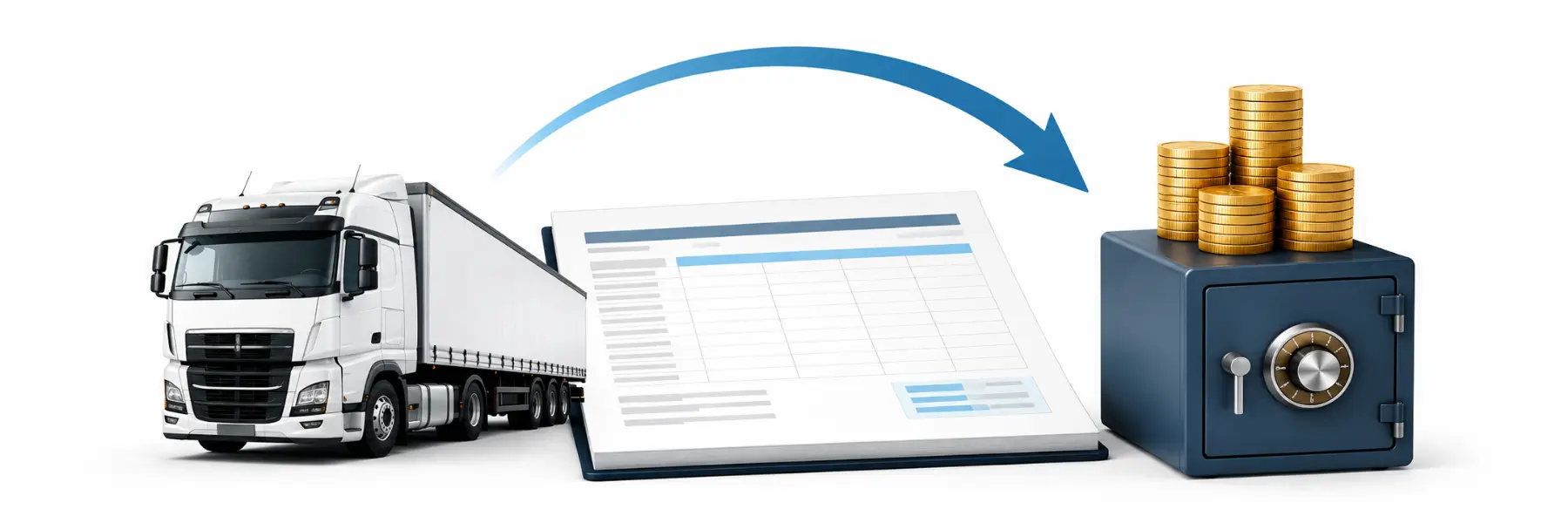
This is the area that matters most to owner-drivers and fleet operators, and it is also the area where chattel mortgage loans consistently outperform other structures for GST-registered businesses.
- Upfront GST claimWhen you finance a truck using a chattel mortgage, you can claim the full GST on the purchase price on your next Business Activity Statement (BAS) following settlement. You do not need to wait for it to dripthrough over the life of the loan. For a $110,000 truck, that is a $10,000 GST credit hitting your BAS in the next quarter — a meaningful cash flow advantage, particularly for a business that is growing.
- Interest deductibilityTheinterest component of every repayment is deductible as a business expense in your annual income tax return, provided the truck is used for business purposes. The principal component is not deductible, but the interest can add up to a meaningful deduction across a five or seven year term.
- Depreciation under the ATO’s effective life scheduleBecause you own the truck from day one, you can claim depreciation on it under the ATO’s effective life rules. Heavy vehicles are typically depreciated over their effective life, and for eligible small businesses with aggregated turnover under $10 million, the $20,000 instant asset write-off has been made permanent from the 2026-27 financial year, meaning any asset costing under $20,000 can be fully deducted in the year of first use.
Always confirm your specific deduction position with your accountant, as the treatment depends on your business structure and how the vehicle is used.
Chattel Mortgage vs Finance Lease: A Plain-English Comparison
The two structures are often confused because the repayments look similar on paper. The tax and ownership treatment is fundamentally different.
| Feature | Chattel Mortgage | Finance Lease |
| Who owns the truck? | You, from day one | The lender, until end of term |
| GST claim | Upfront, on next BAS | On each individual repayment |
| Interest deduction | Yes | Rentals are deductible instead |
| Depreciation claim | Yes (you own the asset) | No |
| Balloon payment | Optional, you decide the amount | Residual set upfront |
| End of term options | Keep it, sell it, trade it | Buy out, extend, or return |
| Best suited to | Businesses wanting ownership and tax benefits | Businesses preferring off-balance-sheet treatment |
For most Australian owner-drivers holding a truck for four to seven years, the chattel mortgage wins on total tax benefit and cash flow. The upfront GST claim, combined with interest and depreciation deductions, outperforms the lease structure for businesses with a steady taxable income to offset.
A finance lease may suit operators who want to return the asset at end of term, or those in a loss-making structure where depreciation deductions are less valuable. If you are not sure which applies to your situation, speak with a Riverwalk Finance broker before committing to either product.
The Balloon Payment Question: What It Is and How to Size It
A balloon payment is a lump sum due at the end of the loan term. Including one in your chattel mortgage reduces your monthly repayments across the life of the loan, which can improve cash flow during the repayment period.
The trade-off is that you need to deal with it when it arrives. At term end, your typical options are:
- Pay it out from business cash reserves
- Refinance the balloon into a new loan
- Sell or trade the truck and use the proceeds to cover it
The mistake many buyers make is setting the balloon too high to chase the lowest possible monthly repayment, then finding themselves in a debt trap when the balloon comes due and the truck’s residual value has fallen below the outstanding amount.
A sensible approach is to align the balloon with the truck’s expected market value at end of term, not simply the amount that gets repayments to a round number. A broker who understands heavy vehicle markets can help you model this correctly from the outset.
Who Is Eligible for a Chattel Mortgage in Australia?
Eligibility varies by lender, but the core requirements generally include:
- An active ABN, typically registered for at least one to two years for standard applications
- The asset being purchased for genuine business use
- A credit profile acceptable to the lender, noting that specialist lenders assess applications differently from major banks
- Sufficient income or cash flow to service the repayments
For self-employed operators and sole traders who cannot provide full financial statements, low-doc truck finance is available through specialist lenders. These applications are assessed on bank statements, BAS history, and business trading activity rather than tax returns and financials. It is a practical route to approval for owner-drivers who run lean on paperwork.
New ABN holders may face stricter terms or require a deposit, but options exist, and a broker can identify which lenders are most likely to approve your specific profile without damaging your credit file through multiple applications.
Why Use a Broker for Your Truck Chattel Mortgage?
Going directly to a single bank limits you to one set of rates, one credit policy, and one view of your application. A finance broker like Riverwalk Finance compares options across a panel of lenders, matches your profile to the right product, and presents your application in the strongest possible light.
For truck finance specifically, this matters because lenders assess heavy vehicles differently from light commercial. Asset age, kilometres, vehicle type, and your industry all affect the rate and structure available to you. A broker with experience in commercial vehicle finance understands these variables and knows which lenders will look most favourably at your situation.
Riverwalk Finance manages your application from initial assessment through to settlement, keeps you updated at every stage, and handles all lender communication. You get the truck. We handle the finance.
To get started, speak with a Riverwalk Finance broker about the right structure for your situation.
Frequently Asked Questions
Can I claim GST on a chattel mortgage?
Yes, if your business is registered for GST, you can claim the full GST on the truck’s purchase price on your next BAS following settlement. The GST is not spread across repayments — it is claimed in full in the period the truck is acquired.
Do I need a deposit for truck finance?
Not always. Many lenders will fund 100% of the purchase price for eligible ABN holders with a strong credit profile. For used trucks or applicants with shorter trading histories, a deposit of 10 to 20% may be required. A broker can clarify what applies to your specific situation.
Is chattel mortgage better than a lease for trucks?
For most owner-drivers who intend to keep the truck and want to maximise tax deductions, a chattel mortgage is the stronger structure. You own the asset, claim the GST upfront, and access both interest and depreciation deductions. A lease may suit situations where ownership is not the goal or the business cannot fully utilise depreciation deductions. Always confirm with your accountant.
Can I get truck finance with low documentation?
Yes. Specialist lenders offer low-doc chattel mortgage products assessed on bank statements and BAS history rather than full financials. This is particularly relevant for sole traders and owner-operators who manage their own books. Riverwalk Finance specialises in low-doc truck finance and can match you with the right lender for your profile.